I am a Professor of AI and Behavioral Data Science at the University of Technology Sydney, where I lead the Behavioral Data Science lab, and Director of the Defence Innovation Network (DIN).
My interdisciplinary research crosses computer and social sciences, blending psycholinguistics, digital communication and stochastic modelling to understand human attention dynamics in the online environment, the emergence of influence and opinion polarisation.
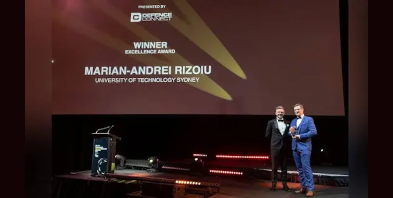
I am a two-time finalist for the prestigious Australian Museum Eureka Prize for Outstanding Science in Safeguarding Australia (2024, 2025), and recipient of the Excellence Award and Academic of the Year at the 2023 Australian Defence Industry Awards.
I have secured $12.1 million in research funding, including $8.56 million from Defence's Advanced Strategic Capabilities Accelerator (ASCA), to detect and model the spread of mis- and disinformation and its weaponised counterparts – information and influence operations.
$12.1Mresearch funding secured
80+peer-reviewed publications
33h-index, 3,100+ citations
11PhD completions
13researchers in the lab
Values as of August 2026.
Research
My research has made several key contributions to information operations detection, online misinformation prediction, and understanding the radicalisation pathways in online environments.
First, I have developed paradigm-shifting behavioural models for detecting state-sponsored information operations. My approach focuses on behavioural fingerprinting rather than content analysis, enabling detection that cannot be easily bypassed by adversaries.
The IC-Mamba system predicts misinformation virality before it occurs, whilst the X-Troll framework provides explainable detection of state-sponsored agents using appraisal theory and linguistic analysis.
Second, my lab’s detection algorithms are integrated into the NARRATE narrative-awareness dashboard, developed with the Defence Science and Technology Group.
That work is directed at early warning, attribution and decision support.
2026-08: I presented "Behavioural fingerprinting for detection and triage of covert IO agents" at ADSTAR 2026 in Adelaide, alongside Lin Tian's talk on hardening information-operation detectors against adaptive adversaries. I also joined the "ADSUN a National System" panel as Director of the Defence Innovation Network.
2026-01: Our paper "DREAMS: A Social Exchange Theory-Informed Modeling of Misinformation Engagement on Social Media" by Lin Tian and Marian-Andrei Rizoiu was accepted at The Web Conference 2026 (WWW'26) in Dubai!
2025-09: Appointed Director of the Defence Innovation Network (DIN), a network of 9 NSW and ACT universities facilitating Defence capability transfer into the NSW industrial ecosystem, managing a $2.3M annual budget.
My research asks how harmful information spreads online, and how it can be detected and countered before it causes real-world harm. The central move is a shift from content-based to behaviour-based detection. Rather than analysing what is said — which raises censorship concerns, requires language-specific tools, and is easily evaded by an adversary who simply changes wording — my methods analyse how information spreads: the behavioural signatures and propagation patterns that coordinated actors cannot hide without abandoning their objective. This makes detection language-agnostic and adversary-resistant, and it is what allows the methods to transfer across platforms and languages.
A second finding, arising from work funded by the Department of Home Affairs, is that misinformation is a problem of social belonging rather than a problem of information. Debunking a falsehood rarely changes minds, because people filter what they read through pre-existing worldviews and community allegiances. This has shifted policy approaches away from fact-checking alone and towards community-level intervention.
I also work on skills and labour markets. Using large collections of online job advertisements, I quantify how similar skills are to one another and build occupation-transition recommenders: which skills a worker can carry into a new occupation, which occupations suit a given set of skills, and where the training gaps lie. The same methods measure how effectively skills are deployed across a workforce.
Where this is heading
The through-line of my work is that online harm is a systems problem rather than a content problem. Whether the subject is a state-sponsored influence campaign, a misinformation cascade during a natural disaster, or a radicalisation pathway, the useful signal lies in how people and populations behave around information, not in the words themselves. That framing is what makes the research portable: a method built for one language and one platform should carry to the next, because it never depended on either to begin with.
Two commitments follow. The first is that detection is only half the problem. Knowing something is spreading is worth little without knowing how much time remains to act and which intervention would help, so my work aims increasingly at forecasting and at the design of interventions rather than at classification alone. The second is that these systems have to be explainable. An analyst or a policymaker cannot act on a score; they need to know why an account, a narrative or a community was flagged, and to be able to disagree with the answer.
I work at the boundary between computer science and the social sciences, which is where I think the interesting problems now sit. The mathematics is only useful insofar as it is disciplined by how people actually behave. My research is built and tested with government and defence partners, and it is meant to end up in the hands of the people who have to make decisions with it.
From research to impact
The research reaches beyond the academy through four channels:
National policy. Findings from my Department of Home Affairs research reframed misinformation as a problem of social belonging rather than information. Research commissioned by the NSW Department of Communities and Justice was then used to revise the communication toolkit deployed in their campaigns for young men at risk of radicalisation.
Operational tools. My lab’s detection algorithms are integrated into the NARRATE narrative-awareness dashboard developed with the Defence Science and Technology Group.
Field-shaping methods. The shift from content analysis to behavioural detection has been recognised by the field, including through the Best Paper Award at The Web Conference 2025.
A national research ecosystem. As Director of the Defence Innovation Network, I connect nine universities with Defence and industry.
Recognition
2024 & 2025 — Finalist, Australian Museum Eureka Prize for Outstanding Science in Safeguarding Australia
2025 — Best Paper Award, The Web Conference (WWW’25)
2026 — Best Exploration Paper Award, BioNLP shared task (ACL 2026)
2023 — Excellence Award and Academic of the Year, Australian Defence Industry Awards
2022 — Best Application Paper Award, Advanced Data Mining and Applications (ADMA’22)
2020 — PitchFest award for a disinformation prototype, NSW Smart Sensing Network
2019 — CNRS IDEXLYON award for research excellence
2012 — Best student paper award, IEEE International Conference on Tools with Artificial Intelligence
Since September 2025, I direct the Defence Innovation Network (DIN) — a consortium of nine NSW and ACT universities, funded by the NSW Government and Defence, that connects university research capability with Defence and the defence industry. I was appointed following competitive recruitment, and serve as one of the node directors of the national Defence Research Network (DRN), which Defence is establishing from the Australian Defence Science and Universities Network.
DIN runs competitive research calls across its member universities, places PhD interns in defence companies, and convenes industry forums and showcase events, on an annual budget of $2.3 million. DIN has brokered more than $100 million in external investment.
Research program leadership
I lead the UTS contribution to an $8.56 million portfolio of three interconnected projects funded through Defence’s Advanced Strategic Capabilities Accelerator (ASCA), spanning UTS, Macquarie University and Adelaide University, which together develop the science, the software and the operational integrations for detecting and countering information operations.
The portfolio was built deliberately, in stages: early Defence Science and Technology Group contracts developed the theory and algorithms; a $1 million Department of Home Affairs program produced operational prototypes; a DIN-funded project demonstrated the approach at regional scale in the Pacific; and the ASCA portfolio now scales it towards deployment.
University leadership and academic service
Faculty representative, Management Committee of the UTS Centre for Media Transitions
Volunteers Chair, Local Organisation Committee, The Web Conference 2025 (WWW’25, Sydney)
Designed and delivered a six-month mentoring program for early- and mid-career researchers, UTS School of Computer Science (2025)
Area Chair, ECML-PKDD (2019–2026)
Program committees: The Web Conference (2018–2025), AAAI, ICWSM, KDD
Reviewer for Nature Human Behaviour, ACM Transactions on Knowledge Discovery from Data, Network Science and ACM CSCW; grant assessor for the Australian Research Council and ZonMw (Netherlands)
Expert for the NSW Government’s defamation law reform (2020); the reform proposal was voted into law in August 2020
Research used as evidence in the Australian Federal Senate inquiry into media diversity (2021)
Consulted for Facebook’s Content Policy team on automating content moderation (2020)
Research findings implemented in national policy, informing government campaigns countering the online radicalisation of young Australians
Research cited in 16 policy documents, including the OECD report "Artificial Intelligence and employment: New cross-country evidence" (Altmetric, February 2026)
Public scholarship
I write for The Conversation — 18 articles reaching more than 264,000 readers, frequently republished by the World Economic Forum, ScienceAlert and Channel News Asia.
Panellist, "Democracy Under Fire", SXSW Sydney — alongside Australia’s eSafety Commissioner
Panellist, UTS Global Game Changers "Too Young to Scroll?" on the under-16 social media ban (2025)
Keynote, Science Misinformation Symposium, Australian Science Media Centre (2026)
Keynote, Australia–Vietnam Strategic Technology Centre launch, Hanoi (2025)
In the media
My research has attracted more than 1,200 media and social-media mentions (Altmetric, February 2026), including Bloomberg Businessweek, the BBC, the World Economic Forum, Nature Index and the Australian Financial Review.
Selected invited talks
2026: ADSTAR Defence IS&T Summit, Adelaide — ecosystem panel and technical program
2026: University of Melbourne Information & Influence Hub; NUS Centre for Trusted Internet and Community, Singapore
2025: Banff International Research Station (BIRS), Canada
2021: LinkedIn Tech Talk Series
2020: Reserve Bank of Australia; NSW Treasury; Department of Education, Skills and Employment
2020: Facebook Content Policy and Moderation, Palo Alto
2019: Defence Science and Technology Group, Adelaide
2018: Facebook Core Research and Netflix Research, California; Max Planck Institute for Software Systems, Germany
I have secured $12.1 million in research funding, including $8.56 million from Defence's Advanced Strategic Capabilities Accelerator across three major projects. The work is supported by Defence and national-security agencies — ASCA, the Defence Science and Technology Group, the Office of National Intelligence and the Department of Home Affairs — alongside the Australian Research Council, state government, industry and philanthropy.
The portfolio was built in stages, each designed to earn the next: early contracts to establish the theory and the algorithms; operational prototyping with national agencies; demonstration at regional scale in the Pacific; and now large multi-institution programs that put the methods in front of the people who have to use them.
Selected funded research
ANVIL: A Narrative Analysis and Visualisation Toolkit for AI Disinformation Campaigns
Department of Defence · 31 Oct 2024 – 30 Oct 2027 · Grant Advanced Strategic Capabilities Accelerator (ASCA-EDT-EXPLOR-2023)
Investigators: Rizoiu M-A, Lewis A, Ransom K and 12 others
Monitor, detect, assess, and counter Information Operations in the Near-Abroad
Department of Defence · 31 Oct 2024 – 23 Jan 2028 · Grant Advanced Strategic Capabilities Accelerator (ASCA-EDT-EXPLOR-2023 – DSP12509)
Investigators: Rizoiu M-A, Booth E, Hawksley C and 4 others
NARRATE – Narrative and Relationship Real-time Awareness Topical Explorer
Defence Science and Technology Group · 4 May 2023 – 28 Jul 2023 · Contract research Defence Science and Technology Group
Investigators: Rizoiu M-A, Boichak O
Disinformation Defence Initiative: Delivering tools and analysis to fight the growing threat of disinformation for Australia
Department of Home Affairs · 29 Jun 2022 – 29 Jun 2025 · Grant Department of Home Affairs
Investigators: Rizoiu M-A, Farid H, Berry A
Grey Zone Theories and Models: Forensic Analysis and Real-time Detection of Disinformation Campaigns
Defence Science and Technology Group · 11 Jun 2021 – 30 Nov 2023 · Contract research Defence Science and Technology Group
Investigators: Rizoiu M-A
Mapping and countering the diffusion of hate speech across social media
Facebook Australia Pty Ltd · 2 Jan 2020 – 31 Dec 2020 · Philanthropic funding Facebook Contract Research
Investigators: Johns A, Bailo F, Rizoiu M-A
Other funded research
Skills Gap Analysis for Local Governments
NSW State Government · 15 Sep 2025 – 31 Aug 2026 · Contract research NSW State Government
Investigators: Rizoiu M-A, Grigorev A
Diverting the Manosphere Pipeline – Designing Interventions to Youth Radicalisation: Phase 1
Department of Communities and Justice · 2 May 2025 – 2 Aug 2025 · Contract research Justice Strategy and Policy (APAC-#67430197)
Investigators: Rizoiu M-A, Booth E, Lee J, Farid H
James Tennant IDP: Financial Warfare and National Security: Integrating Economic Measures into Defence Strategies
Balmoral Ventures Pty Ltd · 1 Apr 2025 – 31 Mar 2033 · Scholarship Balmoral Ventures Pty Ltd
Investigators: Rizoiu M-A, Tennant J
Design Effective Counter-messaging for Online Disinformation and Information Operations
Office of National Intelligence · 3 Oct 2024 – 3 Oct 2026 · Grant National Intelligence Postdoctoral Grant
Investigators: Lee J, Rizoiu M-A
Advancing Research Excellence in Pervasive Sensing for Health: A Strategic Capability Development Plan for Research Funding and Creativity & Innovation
University of Technology Sydney · 22 Apr 2024 – 31 Dec 2024 · Grant UTS ECR Research Capabilities Development Initiative
Investigators: Radhakrishnan M, Peters K, Rizoiu M-A
Bridging Innovative Research and Digital Education in Applied Information Security for critical infrastructures and holistic digital transformation (BRIEDIS)
Australian Academy of Science · 5 Feb 2024 – 10 Mar 2024 · Grant Ukraine-Australia Research Fund
Investigators: Rizoiu M-A, Zolotaryova I
Burning Glass Institute: Building a knowledge graph that combines supply and demand-side labour data
The Burning Glass Institute · 1 Aug 2023 – 1 Oct 2023 · Contract research The Burning Glass Institute
Investigators: Rizoiu M-A, Dawson N
Improving Wikimedia resilience against the risks of content-generating AI systems
Wikimedia Foundation Inc. · 1 Jul 2023 – 31 Oct 2024 · Grant The implications of ChatGPT for knowledge integrity on Wikipedia
Investigators: Davis M, Rizoiu M-A, Ford H, Wilding D, Attard M
Centre for Skills – Identifying the gap between talent required and students trained
Akkodis Australia Consulting Pty Ltd · 1 Jun 2023 – 31 May 2024 · Contract research Akkodis (formerly Modis Consulting)
Investigators: Rizoiu M-A
The International Digital Policy Observatory
Australian Research Council · 14 Apr 2023 – 31 Dec 2024 · Grant ARC Linkage Infrastructure (LE230100069)
Investigators: Wilding D, Hutchinson J, Molitorisz S, Rizoiu M-A, Ford H and 9 others
Design and development of a framework and supporting toolkit for Diversity and Inclusion in AI systems
CSIRO (Data61) · 1 Sep 2022 – 30 Jun 2025 · Grant Data61 CSIRO
Investigators: Zowghi D, Rizoiu M-A, Girard A
A Machine Learning Approach to Skills Identification and Team Formation
Akkodis Australia Consulting Pty Ltd · 4 Jul 2022 – 4 Jul 2025 · Scholarship Akkodis (formerly Modis Consulting)
Investigators: Rizoiu M-A, Kovalev A, Erfani E
Personality Impacts on Individuals, Enterprises and Economies
League of Scholars Pty Ltd · 1 Jan 2022 – 31 Jan 2026 · Scholarship League of Scholars Pty Ltd
Investigators: Gong X, Rizoiu M-A
SocialSense: Making sense of the opinions and interactions of online users
University of Technology Sydney · 1 Aug 2019 – 31 Dec 2020 · Grant UTS Collaboration
Investigators: Bailo F, Johns A, Rizoiu M-A
Enabling Labour Market Agility (D61 Challenge: E06)
Science and Industry Endowment Fund · 1 Apr 2019 – 30 Sep 2019 · Grant SIEF Research Projects
Investigators: Manson C, Rizoiu M-A, Krumpholz A, Duenser A, Reeson A and 7 others
NSW Defence Innovation Network
NSW Department of Industry · 1 Oct 2017 – 30 Aug 2031 · Grant NSW Defence Innovation Network
Investigators: Fitch R, Rizoiu M-A
Where the work is going
Most of my current portfolio concentrates on detecting and countering information operations and online misinformation, delivered with Defence, government and university partners in Australia and internationally. A second strand applies the same behavioural methods to skills and labour markets, supporting government workforce and training policy. A third and newer strand examines safety and rule-evasion in multi-agent AI systems.
Alongside the research I direct the Defence Innovation Network, which connects defence research across nine universities in New South Wales and the ACT and channels university capability into the defence industrial base.
I lead the Behavioral Data Science lab — five postdoctoral researchers and eight PhD students spanning computer science and the social sciences. The lab is both a research group and a professional-development environment: students and postdocs publish in top-tier venues while developing skills in grant writing, stakeholder engagement and policy translation. Lab successes include lead-authored papers at The Web Conference, AAAI and CIKM, the WWW’25 Best Paper Award, and publications in Nature Scientific Data.
Supervision record
I have graduated more than 35 research students, including 11 PhD completions. Alumni hold continuing academic positions at the National University of Singapore and Indiana University Bloomington, a postdoctoral position at the University of Southern California, and research-scientist roles in industry, including at Alibaba and the Burning Glass Institute.
Prospective students
The lab takes students from machine learning, applied statistics and computational social science, as well as those arriving from the social sciences who want to work quantitatively. My approach is to give students problems that matter to someone outside the university, and the room to make them their own. Current openings, expectations and lab details are kept on the lab site.
Earlier teaching
I have previously convened and lectured undergraduate and postgraduate courses at the Australian National University and at Lumière University Lyon, covering relational databases and data warehousing, document analysis, information retrieval and natural language processing, and numerical machine learning.
Between September 2013 and May 2014, I was a PostDoctoral researcher with the ERIC Laboratory,
financed by the ImagiWeb Research Project.
I was equally an assistant professor with the DIS Department, at the
University Lumière in Lyon.
Between 2009 and 2013, I was a PhD student at the ERIC Laboratory with the
University Lumière Lyon2, under the supervision of
Stéphane Lallich and Julien Velcin.
I defended my PhD thesis on June 24th 2013, with honours "Très Honorable".
In July 2009, I obtained my MSc (graduating first of promotion, with honours) in Data Mining and Knowledge Engineering from the
Polytechnic School of the University of Nantes, France
and wrote my Master’s Thesis on "Textual Data Clustering and Cluster Naming" after an internship at the ERIC Laboratory.
Between 2004 and 2009, I did my undergrad and obtained in September 2009 my Engineer Diploma (double diploma, in parallel with the
French Master's) in System and Computer Engineering from the
Faculty of Automatic Control and Computers of the
Polytechnic University Bucharest, Romania.
Lee, J., Booth, E., Farid, H., & Rizoiu, M.-A. (2026). "Popping misinformation bubbles: persona-informed style-based messaging in Facebook ad experiments." in Journal of Computational Social Science, 9(4), 62. DOI: 10.1007/s42001-026-00493-0
paper:
Schneider, P. J., Yuan, L., & Rizoiu, M.-A. (2026). "Beyond content: behavioral policies reveal actors in information operations." in npj Complexity. DOI: 10.1038/s44260-026-00085-z
paper:
Tian, L., Zhang, X., Kim, M. M.-H., Biggs, J., & Rizoiu, M.-A. (2025). "X-Troll: eXplainable Detection of State-Sponsored Information Operations Agents." in CIKM’25, (pp. 2874--2884). DOI: 10.1145/3746252.3761028
paper:
Source code
Tian, L., Booth, E., Bailo, F., Droogan, J., & Rizoiu, M.-A. (2025). "Before It’s Too Late: A State Space Model for the Early Prediction of Misinformation and Disinformation Engagement." in The Web Conference (WWW’25), (pp. 5244--5254). DOI: 10.1145/3696410.3714527
paper:
Source code
Kong, Q., Calderon, P., Ram, R., Boichak, O., & Rizoiu, M.-A. (2023). "Interval-censored Transformer Hawkes: Detecting Information Operations using the Reaction of Social Systems." in The Web Conference (WWW’23), (pp. 1813--1821). DOI: 10.1145/3543507.3583481
paper:
Schneider, P. J., & Rizoiu, M.-A. (2023). "The effectiveness of moderating harmful online content." in Proceedings of the National Academy of Sciences (PNAS), 120(34). DOI: 10.1073/pnas.2307360120
paper:
Lee, J., Booth, E., Farid, H., & Rizoiu, M.-A. (2025). "Misinformation is not about bad facts: an analysis of the production and consumption of fringe content." in EPJ Data Science, 14, 50. DOI: 10.1140/epjds/s13688-025-00567-5
paper:
Rizoiu, M.-A., Graham, T., Zhang, R., Zhang, Y., Ackland, R. J., & Xie, L. (2018). "#DebateNight: The Role and Influence of Socialbots on Twitter During the 1st 2016 U.S. Presidential Debate." in ICWSM’18, (pp. 300--309).
paper:
Source code
Modelling information diffusion
Yuan, L., Schneider, P. J., & Rizoiu, M.-A. (2025). "Behavioral Homophily in Social Media via Inverse Reinforcement Learning: A Reddit Case Study." in The Web Conference (WWW’25), (pp. 576--589). Best Paper Award. DOI: 10.1145/3696410.3714618
paper:
Rizoiu, M.-A., Soen, A., Li, S., Calderon, P., Dong, L., Menon, A. K., & Xie, L. (2022). "Interval-censored Hawkes processes." in Journal of Machine Learning Research (JMLR), 23(338). JMLR: v23/21-0917
paper:
Rizoiu, M.-A., Mishra, S., Kong, Q., Carman, M., & Xie, L. (2018). "SIR-Hawkes: Linking Epidemic Models and Hawkes Processes to Model Diffusions in Finite Populations." in The Web Conference (WWW’18), (pp. 419--428). DOI: 10.1145/3178876.3186108
paper:
Source code
Rizoiu, M.-A., Xie, L., Sanner, S., Cebrian, M., Yu, H., & Van Hentenryck, P. (2017). "Expecting to be HIP: Hawkes Intensity Processes for Social Media Popularity." in The Web Conference (WWW’17), (pp. 735--744). DOI: 10.1145/3038912.3052650
paper:
Source code
Skills, labour markets and people
Kern, M. L., McCarthy, P. X., Chakrabarty, D., & Rizoiu, M.-A. (2019). "Social media-predicted personality traits and values can help match people to their ideal jobs." in Proceedings of the National Academy of Sciences (PNAS), 116(52), 26459--26464. DOI: 10.1073/pnas.1917942116
paper:
Source code and datasets
Liu, Y. (2021). "Labour dynamics in the age of automation: detecting emergent skills in labour markets from job ads description." Australian National University.
thesis:
Tripathi, K. (2021). "Profiling Information Warfare on Social Media: A Forensic Analysis of the 2019 Australian Elections." Australian National University.
thesis:
Law, A. (2021). "Exposing the Stance of Reddit Users Towards Brexit." Australian National University.
thesis:
Khuu, D. (2021). "Polarisation and Influence: Investigating Brexit Opinion Dynamics on Reddit." Australian National University.
thesis:
Mardale, A. (2019). "Information Diffusion in Online Communities." Université Jean Monnet.
thesis: